I came to photography relatively late, after moving for many years between sociology, art, politics, culture, literature and photography. I have always been interested in moments of transformation, how individuals and societies experience rupture, loss, memory, and change. Photography has gradually become the place where these questions converge, and where I can approach them not only intellectually.
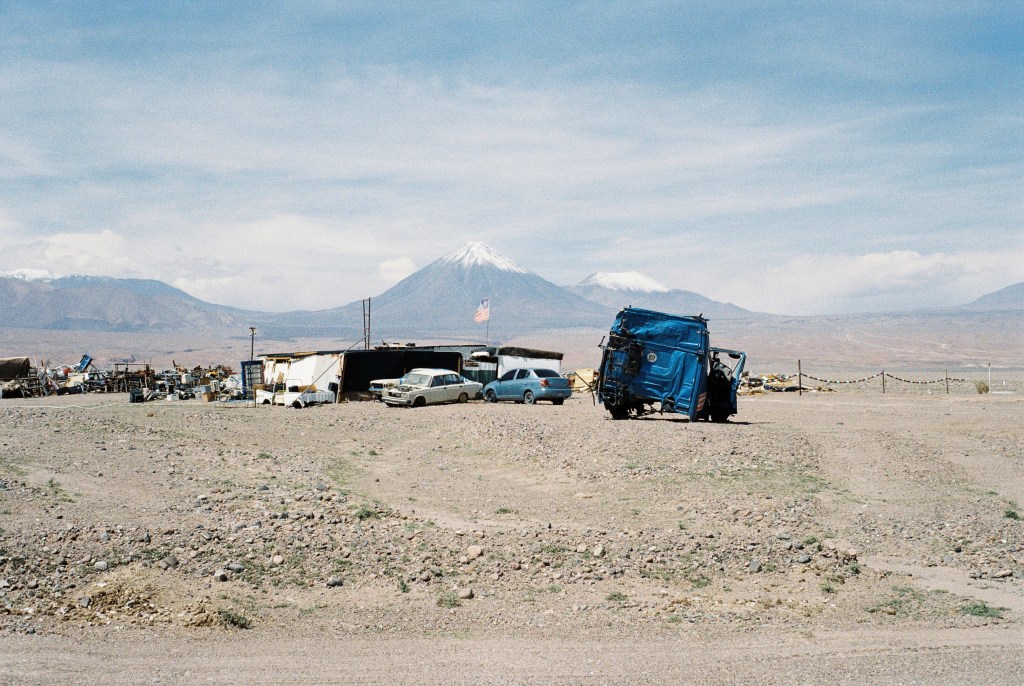
My current practice is deeply personal, although I do not see it as autobiographical in a conventional sense. I am interested in the intimate as a way of reaching something more universal: how we carry pain, memory, love, loss, and mortality in our bodies and relationships. My on-going series include La poderosa muerte, Love Will Tear Us Apart, Wounded Heroes, Ojos que no ven and Tengo miedo de las nubes.
La poderosa muerte looks at the animitas of the Atacama Desert, small shrines created by families for the souls of those who died tragically and, according to popular belief, are condemned to wander. In Love Will Tear Us Apart, I explore young love, hope, impermanence, sadness, and heartbreak. Wounded Heroes explores the traces of pain on the body, beginning with photographs of a friend who had undergone a mastectomy. I became interested not only in pain, but in bodily transformation, deformity, the clinical experience, fear, vulnerability, and the presence of death. Ojos que no ven questions the act of seeing itself: what we fail to notice, what we choose not to see, and what photography can suddenly reveal. Tengo miedo de las nubes emerges from my mother’s Alzheimer’s disease and explores memory, disappearance, and what remains when language begins to dissolve.
Four photographers have been particularly influential in shaping my understanding of photography: Nan Goldin, Francesca Woodman, Sergio Larraín, and Graciela Iturbide. Goldin’s radical intimacy and her refusal to separate photography from lived experience have shown me how photography can become a form of proximity and testimony. Woodman’s work has deeply influenced my thinking about the body, disappearance, vulnerability, and the unstable boundary between presence and absence. Sergio Larraín’s poetic and intuitive approach, his attention to chance, ambiguity, shadows, and fleeting moments, has influenced the way I think about seeing and about what photography can reveal beyond conscious intention. Graciela Iturbide’s exploration of death, ritual, spirituality, landscape, and the relationship between the visible and invisible has been particularly important to my thinking about photography as a way of approaching what cannot be fully explained or understood.
Walter Benjamin’s work has been an important companion in this process. His reflections on memory, history, catastrophe, and the fragment have profoundly influenced the way I understand images. I am particularly drawn to the idea that the past does not simply remain behind us, but can suddenly emerge in the present — in a gesture, an object, a body, or an image.
 Patricia Abarca de la Fuente